

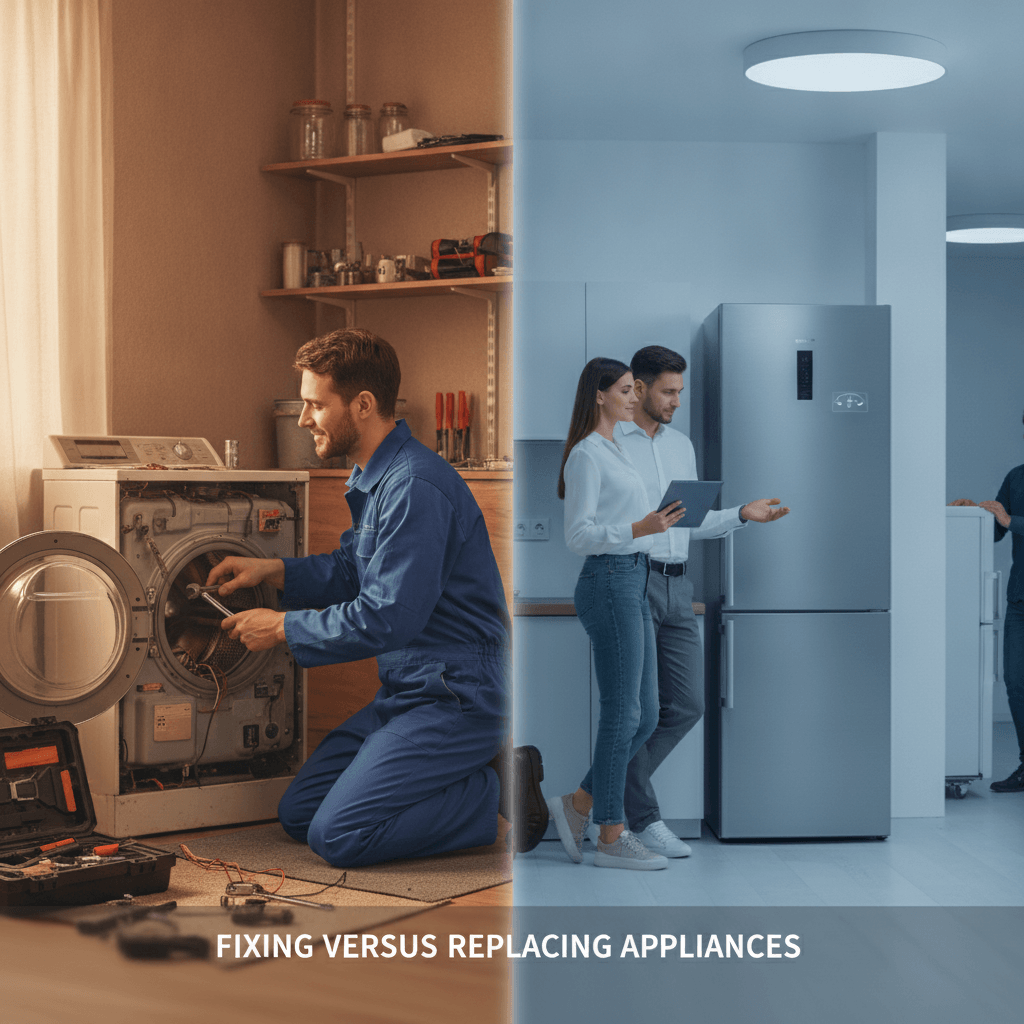
As a homeowner, I have faced the familiar dilemma of a failing appliance many times. The refrigerator starts making a strange noise or the washing machine suddenly stops mid-cycle. It is never a convenient moment when a critical household item decides to break down. This situation brings up a common question: should I fix it or just buy a new one?
This decision is not always simple. It involves weighing several factors, from the immediate financial cost to long-term value. I understand the frustration and uncertainty that comes with these unexpected breakdowns. My goal is to help you navigate this choice with clear, practical advice.
Making the right call can save you money and headaches in the long run. We will explore the key considerations for fixing versus replacing appliances, offering insights that I have gathered through years of observing homeowner experiences.
Understanding the Lifespan of Common Appliances
Every appliance has an estimated lifespan. Knowing this average can greatly influence your decision. For example, a refrigerator typically lasts between 10 to 18 years, while a washing machine might last 10 to 13 years. If your appliance is already nearing the end of its expected life, replacing it might be the more sensible option. I always advise people to check the age of their unit first.
An older appliance will likely have more wear and tear. This means one repair might just be the start of a series of issues. You could end up spending a lot on repairs that accumulate quickly. It is like constantly patching up an old car that is ready for the junkyard.
Estimating Remaining Service Life
To estimate the remaining service life, consider the average lifespan provided by manufacturers or consumer reports. If your dishwasher is 8 years old and the average is 10 years, it still has some life left. This means a minor repair could be a good investment.
However, if that same dishwasher is 12 years old, you are already past its prime. Investing in a major repair might not pay off. The money spent could be better allocated towards a newer, more reliable model. I have seen many people throw good money after bad simply because they did not consider the age of the appliance.
Calculating Repair Costs Versus New Purchases
The cost of repair is a major factor. I often tell people to follow the 50 percent rule. If the repair cost is more than 50 percent of the price of a new appliance, then replacing it is usually the better choice. This rule helps you avoid overspending on an item that might break again soon.
Get multiple quotes from different technicians. Repair costs can vary widely depending on the parts needed and the labor involved. Do not just go with the first quote you receive. Comparison shopping applies to repairs just as much as it does to new purchases.
When Repair Makes Financial Sense
Repair often makes financial sense for newer appliances. If your refrigerator is only a few years old and needs a minor part replacement, a repair is almost always the way to go. The initial cost of a new appliance is often much higher than fixing a small problem.
Also consider the cost of installation for a new appliance. This can add significantly to the overall expense. Some repairs are simple and inexpensive, giving your appliance many more years of service without breaking your budget. Always get a clear breakdown of parts and labor from the technician.
Considering Energy Efficiency Upgrades
Older appliances are generally less energy efficient than newer models. They can consume a lot more electricity or water, leading to higher utility bills. When an old appliance breaks down, it presents an opportunity to upgrade to something more efficient. I have personally seen how a new energy-efficient washing machine can reduce electricity and water consumption.
Energy Star certified appliances, for example, are designed to save you money on operating costs over time. Even if the initial replacement cost seems high, the savings on your utility bills can make up for it surprisingly quickly. It is an investment in your home’s future and your wallet.
Long-Term Savings with New Models
Calculate the potential long-term savings from a more energy-efficient model. Many appliance websites and utility companies offer calculators that estimate energy consumption. You can compare the operating cost of your old appliance with a new one. This can reveal significant savings, especially for items like refrigerators and water heaters that run constantly.
For example, if you are debating whether to repair or replace your water heater, a new tankless model, while a higher upfront cost, could offer substantial energy savings over its lifetime. These savings often make replacement a financially sound decision in the long run.
Assessing the Severity of the Problem
The type and severity of the appliance problem play a crucial role in your decision. A minor issue, like a broken belt in a dryer or a faulty sensor in an oven, is usually an easy fix. These are common problems that skilled technicians can resolve quickly and affordably. I always start by trying to diagnose the issue myself with a quick online search. Sometimes it is something simple.
On the other hand, major issues like a failing compressor in a refrigerator or a cracked drum in a washing machine can be very expensive to repair. These problems often indicate the appliance is at the end of its functional life. Repairing such a severe issue might not guarantee future reliability.
Distinguishing Minor from Major Issues
Minor issues often involve small, replaceable parts. They might cause inconvenience but do not typically render the entire appliance unusable. Think of a clogged drain in a dishwasher or a loose connection in a garbage disposal. These are usually good candidates for repair.
Major issues impact the core functionality of the appliance. If the engine of your car needs replacing, you consider a new car. The same applies to appliances. If the cost of the repair for a major component approaches the cost of a new unit, it is time to consider replacement. This practical approach saves money and avoids ongoing frustrations.
The Value of Warranty and Maintenance
Your appliance’s warranty can be a game-changer. If your appliance is still under warranty, repairs might be covered by the manufacturer or the store you bought it from. Always check your warranty details before scheduling a repair. This can save you a lot of money and effort. I have often seen people overlook this crucial step.
Regular maintenance can extend the life of your appliances significantly. Cleaning refrigerator coils, descaling coffee makers, and checking dryer vents are all simple tasks that prevent major breakdowns. When you maintain your appliances, they last longer and perform better, delaying the need for costly repairs or replacements.
Benefits of Extended Warranties
Extended warranties can provide peace of mind for several years beyond the manufacturer’s warranty. If you have an extended warranty, review its terms carefully. It might cover the repair entirely or offer a significant discount. This can be a strong reason to repair rather than replace, especially for expensive appliances.
However, I also advise against blindly purchasing extended warranties for every appliance. Assess the reliability of the brand and the typical repair costs for that appliance type. Sometimes, the cost of the extended warranty outweighs the potential benefit. It is about making an informed decision for each specific situation.
When a Professional Opinion Matters
Sometimes, the decision is too complex to make alone. This is when a professional appliance technician becomes invaluable. A good technician can accurately diagnose the problem, provide an estimate for the repair, and offer an honest opinion on whether a repair is worth it. I always trust a professional’s assessment, especially for complicated issues.
They can also tell you if the necessary parts are still available. Older models might have discontinued parts, making repairs difficult or impossible. A professional can help you weigh the pros and cons based on their expertise and access to industry knowledge. Their insight can prevent you from making a costly mistake.
Finding a Reliable Technician
To find a reliable technician, ask for recommendations from friends, family, or neighbors. Check online reviews and ratings. A trustworthy technician will explain the problem clearly and provide a written estimate before starting any work. Avoid technicians who push for immediate, expensive replacements without proper diagnosis.
A second opinion is also a smart move, especially for major repairs. Just like with medical advice, getting another expert’s view can confirm the diagnosis and ensure you are getting a fair price. This due diligence ensures you make the best decision for your home and your budget.
Making the Smart Choice for Your Home
Deciding between fixing and replacing appliances is a nuanced process. It requires careful thought about the appliance’s age, the repair cost, the potential energy savings from a new model, and the severity of the malfunction. I have learned that there is no one-size-fits-all answer, but applying these guidelines will empower you to make an informed choice every time. Remember to factor in your personal budget and future plans for your home. If you are considering selling soon, an expensive repair on an old unit might not add much value. However, a new, efficient appliance could be a selling point. Take your time, gather the facts, and consult with professionals when needed. Your decision will be a smart investment in your home’s comfort and functionality. Always weigh the immediate costs against the long-term benefits and operational efficiency. Doing so will ensure you are making the most economical and practical choice for your household needs.